

Looking for the best homemade Starbucks copycat lemon loaf recipe? This easy lemon loaf is the perfect copycat version of Starbucks' famous lemon loaf—and it's developed by a former Starbucks barista who made this iconic pastry hundreds of times.
If you've been craving that signature moist, tender crumb and bright lemon flavor without the hefty price tag, this copycat lemon loaf recipe delivers exactly what you're looking for. Made with ricotta cheese for extra moisture and fresh lemon juice and zest for authentic citrus flavor, this homemade version rivals the original. Whether you're a Starbucks regular or just love lemon desserts, this simple lemon loaf recipe is now your go-to for café-quality baking at home.
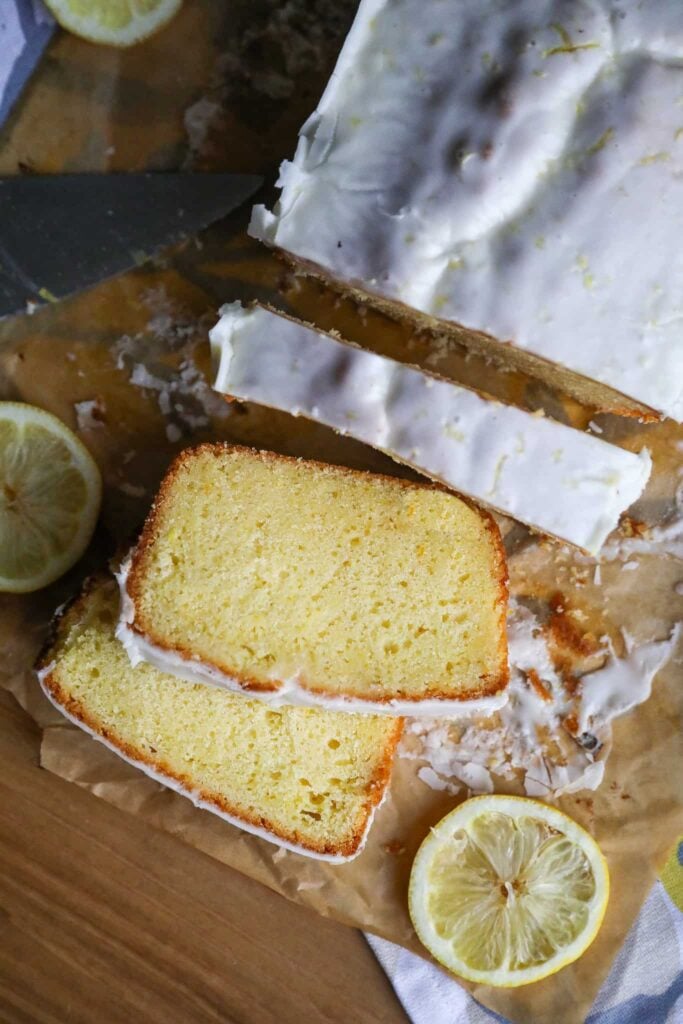
Key Ingredients for this ricotta and lemon poundcake
- All-Purpose Flour — The foundation of the cake, providing structure and texture to the dense, moist crumb.
- Unsalted Butter — A full cup of room temperature butter creates richness and helps achieve that tender pound cake texture.
- Ricotta Cheese — The star ingredient that adds moisture and a slightly tangy flavor while keeping the cake tender rather than dry.
- Fresh Lemon Juice & Zest — Provides bright citrus flavor throughout; you'll use fresh lemon juice and zest to infuse the cake with authentic lemon taste.
- Granulated Sugar — Sweetens the cake and, when creamed with butter, helps create a light, fluffy batter.
Instructions to make this lemon loaf cake
- Lower the oven rack to the lower third position and preheat the oven to 350°F Line a 9×5 inch loaf pan with parchment paper.
- In a large bowl, whisk the flour, baking powder, and salt together. Set aside.
- With a handheld or stand mixer fitted with whisk attachment, beat the butter on high speed in a large bowl until smooth for 1 minute. Add the sugar and beat on high speed for 2 minutes. Scrape down the sides and up the bottom of the bowl as needed.
- With the mixer running on low speed, add the eggs one at a time. Once the last egg is completely mixed in, stop the mixer. Add the ricotta, lemon juice, lemon zest, lemon curd, oil, and vanilla extract, then beat on medium speed until combined. Scrape down the sides and up the bottom of the bowl as needed.
- With the mixer running on low speed, slowly add the dry ingredients just until combined. Do not over-mix.
- Spread the batter into prepared loaf pan and bake for 50 minutes. Cover the cake with tented aluminum foil for 30 minutes while baking to prevent the top from over-browning. After 30 minutes, remove the aluminum foil.
- Baking times vary, so keep an eye on yours and don’t be alarmed if yours is taking longer. The cake is done when a toothpick inserted in the center comes out clean.
- Remove the cake from the oven and place on a wire rack. Allow cake to cool in the pan completely before removing from pan.
Make the icing
- In a medium sized bowl, whisk all of the icing ingredients together. Pour the icing over cake, once the cake has completely cooled.
- Serve immediately or wait until the icing sets completely, which provides your with clean slices.
- Cover and store leftover cake for up to 1 week in the refrigerator.

Variations and Substitutions for this lemon pound cake
Citrus Variations: Swap the lemon for lime, orange, or grapefruit zest and juice for a different citrus twist. You could also do a mixed citrus version using lemon and orange together for extra complexity.
Flavor Add-Ins: Mix in poppy seeds, fresh blueberries, or raspberries folded into the batter. You could also add a touch of almond extract, vanilla extract, or even a pinch of cardamom for warmth.
Ricotta Substitutions: Use Greek yogurt (it's tangier but creates a similar moist crumb), sour cream, or mascarpone for a richer version. Cottage cheese works too, though you'll want to blend it smooth first.
Dairy Swaps: Replace some or all of the butter with olive oil for a lighter, more Mediterranean feel. Use buttermilk instead of regular milk for added tang and tenderness.
Glaze & Topping Options: Drizzle with a lemon glaze, cream cheese frosting, or a simple powdered sugar glaze. Top with candied lemon slices, lemon curd, or fresh whipped cream and berries.
Dietary Adjustments: Use gluten-free flour (with a binder) for a GF version, or substitute sugar with a 1:1 baking blend for lower-sugar options. Almond flour can replace some of the regular flour for nuttiness.
Texture Variations: Add a streusel or crumb topping for crunch, or make mini loaves or muffins instead of one large cake for portion control.

Storage instructions for this Starbucks copycat lemon poundcake
Room Temperature: Store in an airtight container at room temperature for up to 2 days. The cake stays moist and tender during this time.
Refrigerator: Place in an airtight container and refrigerate for up to 5 days. The cool temperature helps preserve the cake longer, though it may be slightly denser when cold. Let it come to room temperature or warm it gently before serving for the best texture.
Freezer: To freeze, do not pour the lemon icing. Wrap the cooled cake tightly in plastic wrap, then place it in a freezer-safe container or bag. Freeze for up to 3 months. Thaw at room temperature for 2-3 hours before serving, or refrigerate overnight.
Frosting/Glaze: If your pound cake has a lemon glaze or frosting, keep it refrigerated and consume within 3-4 days for best quality.
Pro Tip: Pound cakes actually improve slightly after a day or two as the flavors meld and the crumb sets—so don't hesitate to make it ahead!

Check out these other dessert recipes




Lemon Ricotta Pound Cake recipe
Ingredients
- 1 and ½ cups all-purpose flour
- ½ teaspoon baking powder
- ½ teaspoon salt
- 1 cup unsalted butter at room temperature
- 1 cup granulated sugar
- 3 large eggs
- ¼ cup full fat ricotta cheese
- 5 Tablespoons fresh lemon juice about 2 lemons
- zest of 1 lemon
- 2 Tablespoons of lemon curd
- 2 Tablespoons of vegetable oil
- 1 teaspoon pure vanilla extract
- Lemon Icing
- 1 cup confectioners’ sugar sifted
- 1 and ½ Tablespoons of fresh lemon juice
- 1 Tablespoon of heavy cream
- zest of one lemon
Instructions
- Lower the oven rack to the lower third position and preheat the oven to 350°F Line a 9×5 inch loaf pan with parchment paper.
- In a large bowl, whisk the flour, baking powder, and salt together. Set aside.
- With a handheld or stand mixer fitted with whisk attachment, beat the butter on high speed in a large bowl until smooth for 1 minute. Add the sugar and beat on high speed for 2 minutes. Scrape down the sides and up the bottom of the bowl as needed.
- With the mixer running on low speed, add the eggs one at a time. Once the last egg is completely mixed in, stop the mixer. Add the ricotta, lemon juice, lemon zest, lemon curd, oil, and vanilla extract, then beat on medium speed until combined. Scrape down the sides and up the bottom of the bowl as needed.
- With the mixer running on low speed, slowly add the dry ingredients just until combined. Do not over-mix.
- Spread the batter into prepared loaf pan and bake for 50 minutes. The cake with aluminum foil halfway through baking to prevent the top from over-browning. Baking times vary, so keep an eye on yours and don’t be alarmed if yours is taking longer. The cake is done when a toothpick inserted in the center comes out clean.
- Remove the cake from the oven and place on a wire rack. Allow cake to cool in the pan completely before removing from pan.
- I prefer to add the icing once the cake has completely cooled. Whisk all of the icing ingredients together and pour over cake. Serve immediately or wait until the icing sets completely, which provides your with clean slices.
- Cover and store leftover cake for up to 1 week in the refrigerator.
Petite says
Are you sure it’s one cup of butter and not one stick?
Cari says
Yes, I am sure! It’s one cup (2 sticks) of butter.