

Golden, flaky, and filled with sweet coconut goodness, Cuban coconut pastelitos are one of those treats that spark strong opinions. You either absolutely love them or they’re just not your thing. Made with buttery, store-bought puff pastry sheets and a rich homemade coco en almíbar (coconut simmered in a fragrant sugar syrup), these pastries bring together crisp layers and a sticky, caramelized filling that feels both comforting and nostalgic.
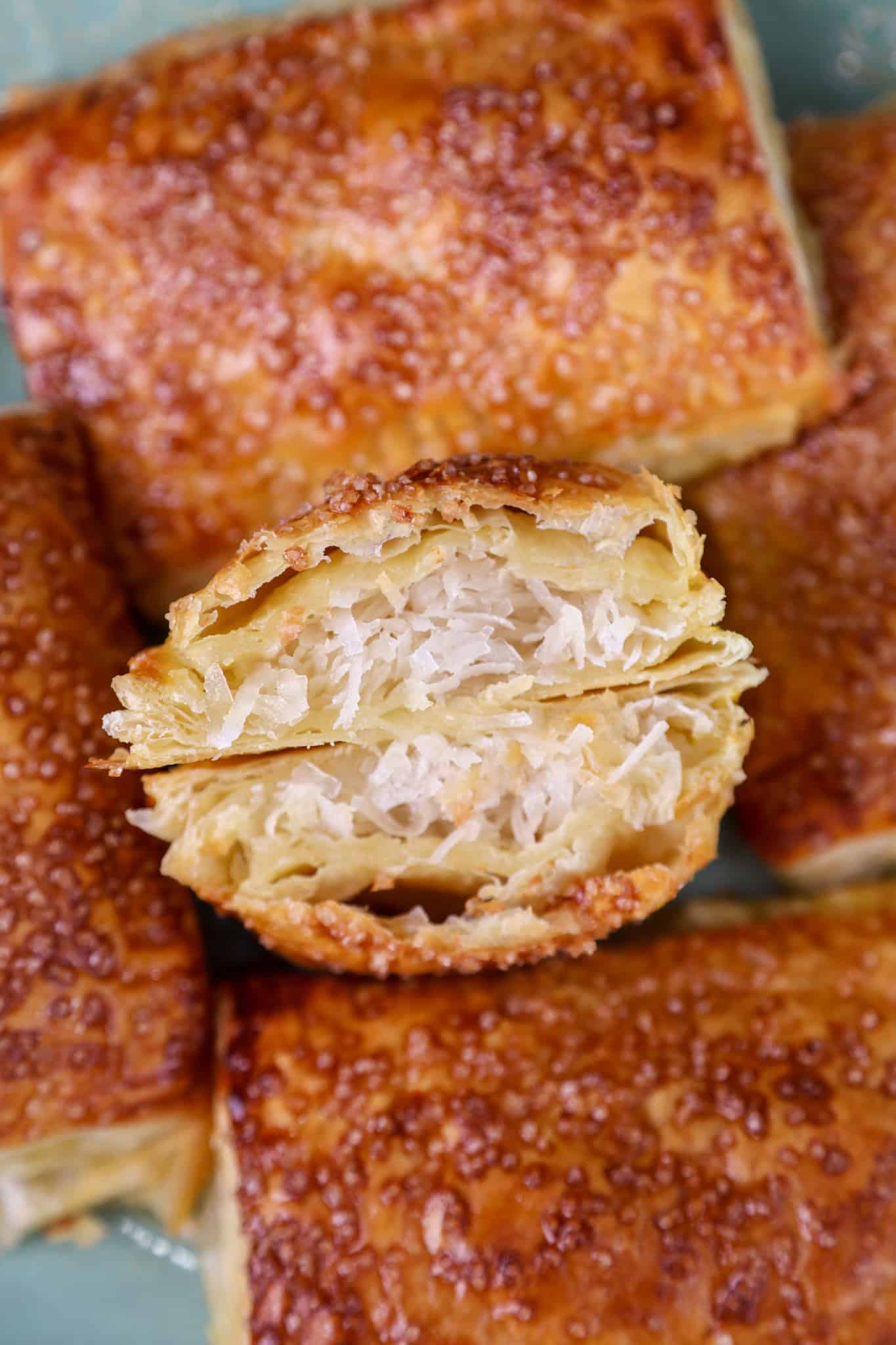
Found in bakeries across Miami, they’re a staple of Cuban pastry culture, often enjoyed with a cafecito in the afternoon. This recipe keeps things simple while honoring tradition, letting the homemade coconut filling shine inside perfectly baked, golden pastry.
Why you'll love these coconut pastries
Authentic Cuban flavor – Made with traditional coco en almíbar, giving you that true bakery-style taste
Perfect balance of textures – Flaky, buttery puff pastry with a sweet, sticky coconut filling
Rich coconut goodness – Homemade syrup brings out deep, caramelized coconut flavor you can’t get from canned fillings
Great for sharing – Ideal for parties, holidays, or family gatherings
Customizable sweetness – You control the syrup, so you can make it as sweet (or not) as you like
What is a pastelito?
Cuban pastelitos are small, flaky pastries filled with a sweet and savory filling. They are a popular Cuban treat, often enjoyed for breakfast, snack, or dessert.
There are many variations of pastelitos, but the most common fillings include:
- Guava: A sweet and tangy fruit paste.
- Cheese: cream cheese filling.
- Picadillo: savory pastelito filled with cuban minced meat
The pastry itself is typically made with puff pastry or a similar flaky dough. It is often deep-fried or baked until golden brown and crispy. Pastelitos are a delicious and versatile treat that can be enjoyed in many different ways.
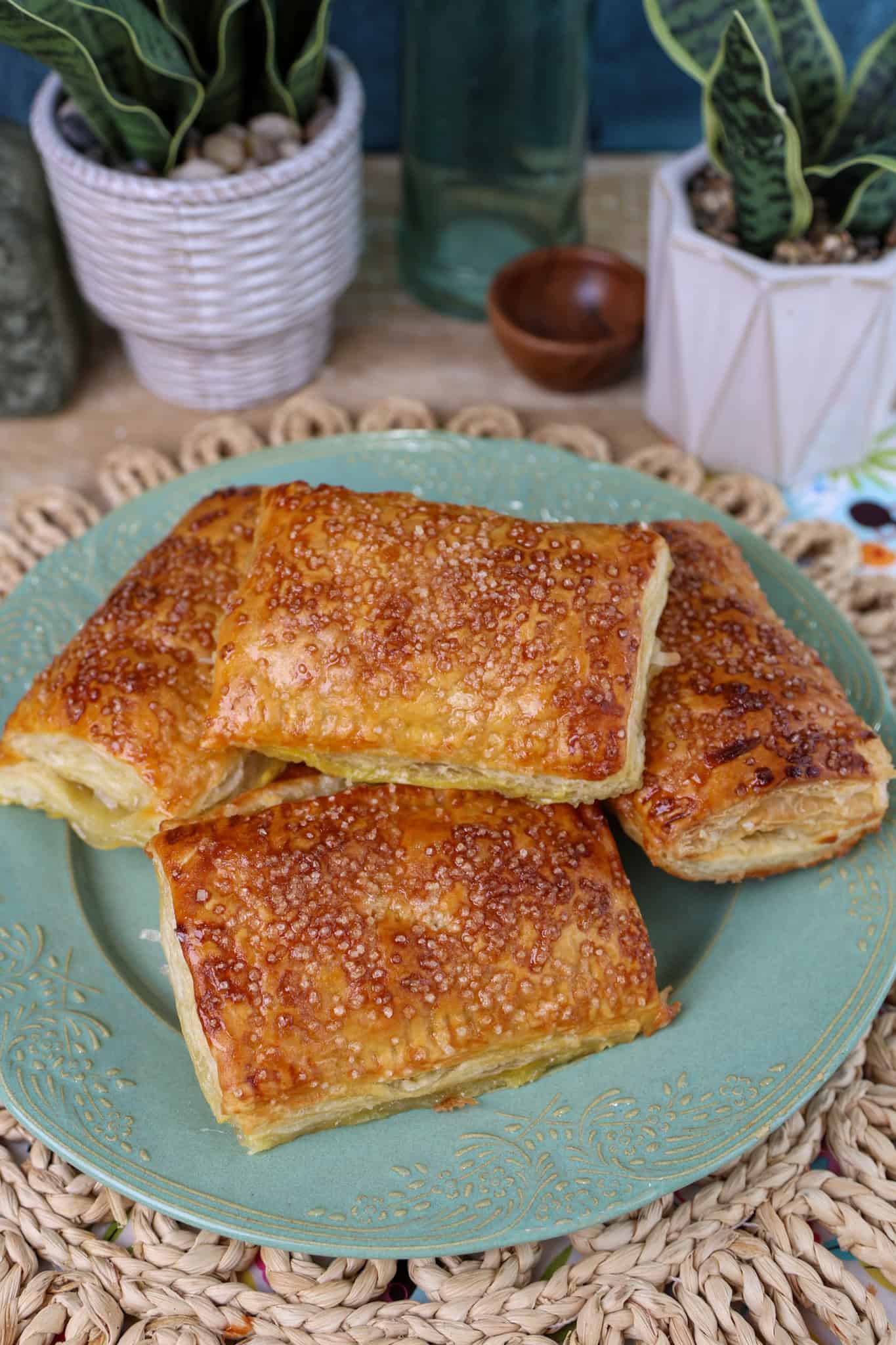
Key ingredients needed for this Cuban coconut pastry
For all ingredients and quantities, check the recipe card below.
- Puff Pastry - Storebought puff pastry sheets, I used Pepperidge Farms brand.
- Water - The water in this coconut pastry recipe acts as the glue between pastry sheets and is used to make the simple syrup.
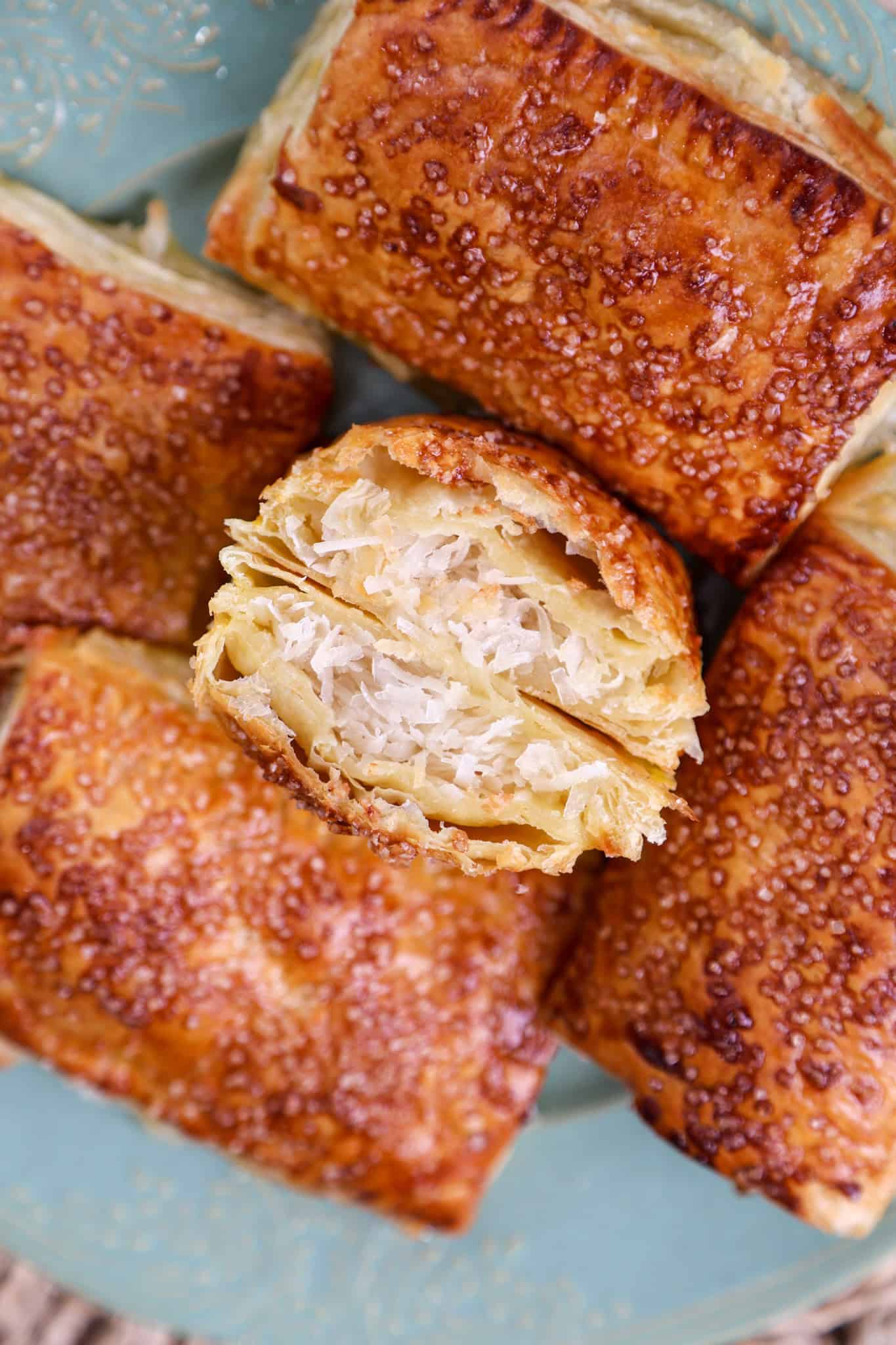
- Coco en almibar - The star of the show, this delicious shredded coconut in sweet syrup softens in the oven to make a delicious filling.
- Eggs - A whisked egg brushed on the top of the pastry ensures a golden pastry top
- Sugar - Once the pastry comes out of the oven, the simple syrup is generously brushed over the top of the golden pastry squares.
How to make these Cuban pastries
- Heat oven to 420F. Line a baking sheet with parchment paper. Add the egg to a small bowl, beat, then set aside.
- Unfold each puff pastry sheet over the parchment paper and cut into 6 rectangles. You should have 12 rectangles total.
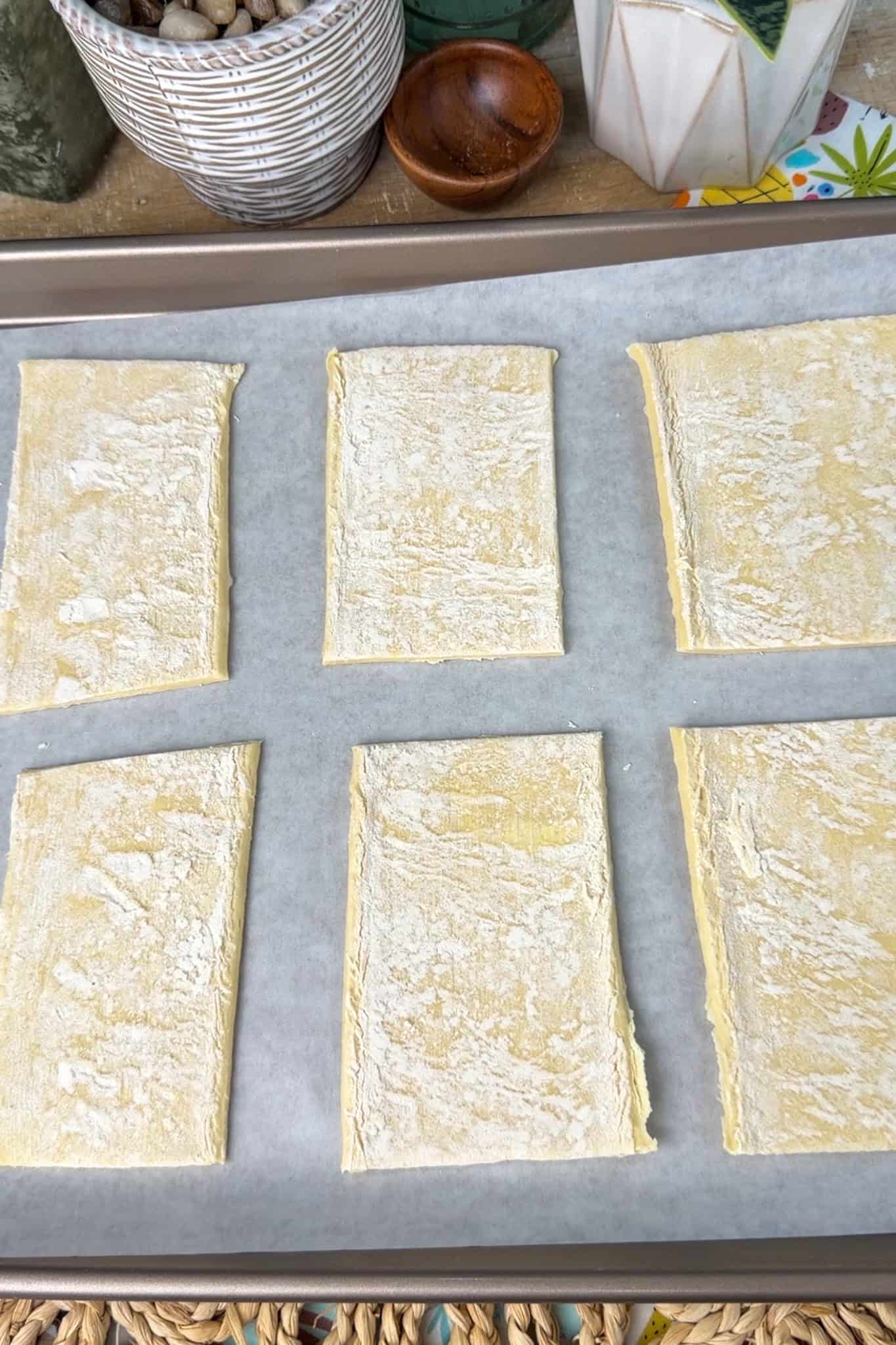
- Place your coco en almibar in a fine mesh strainer and place the strainer in a bowl to drain excess syrup. If the coconut has too much syrup will spill and spread all over the baking pan while in the oven.
- Place 2 tablespoons of strained coconut in the center of each rectangle, leaving about ½ an inch of pastry around the edges.
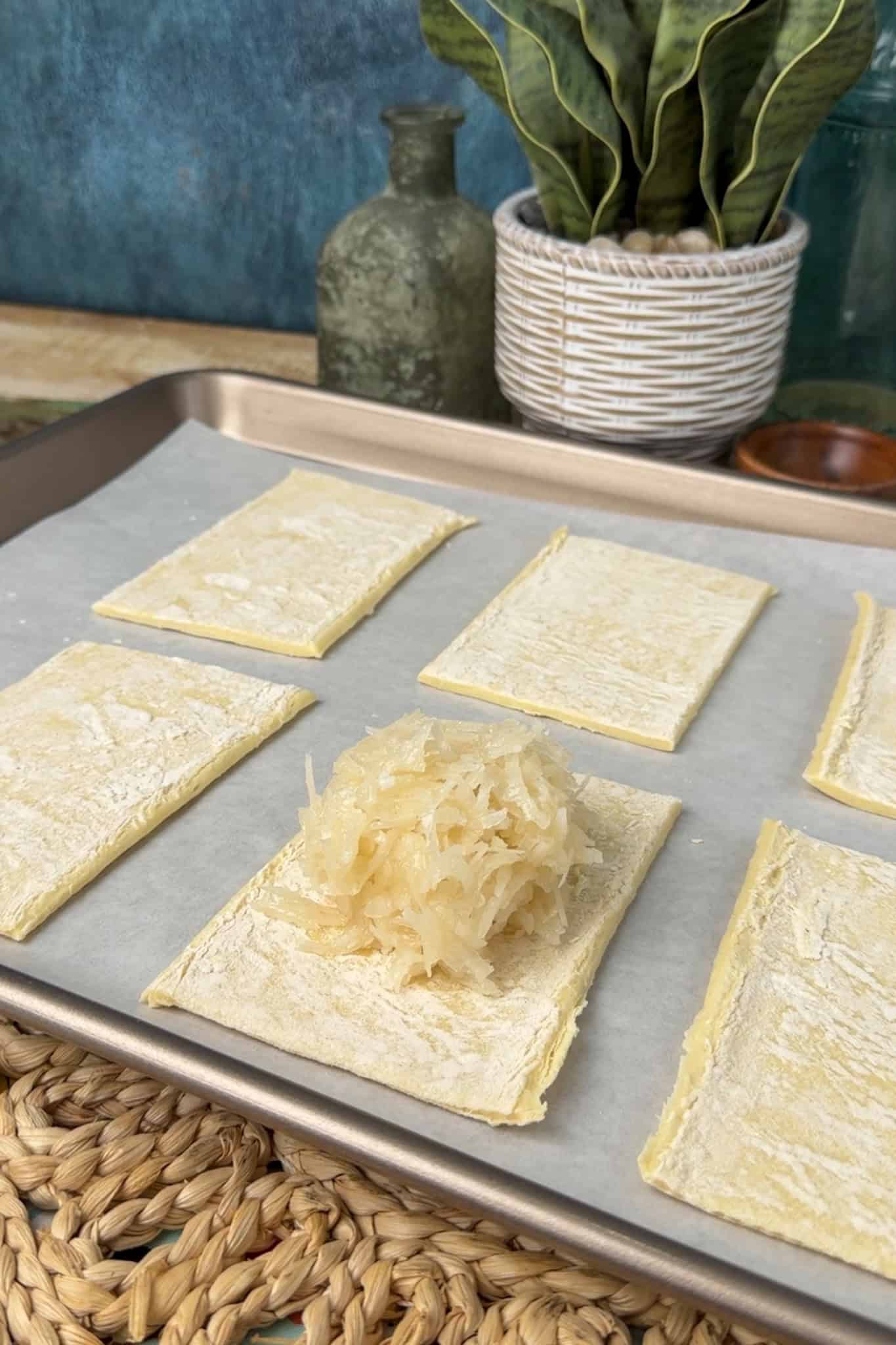
- Brush water on the exposed pastry edges around the coconut and then place the tops of the puff pastry (the remaining rectangles) on the prepared pastry with coconut. Press the edges of the pastelitos so seams are sealed together.
- Cut a small slice or poke a couple of holes on the top of the pastry to allow steam out while baking.
- Crack an egg into a small bowl and whisk it until well combined and then brush the tops of the puff pastries with the egg.
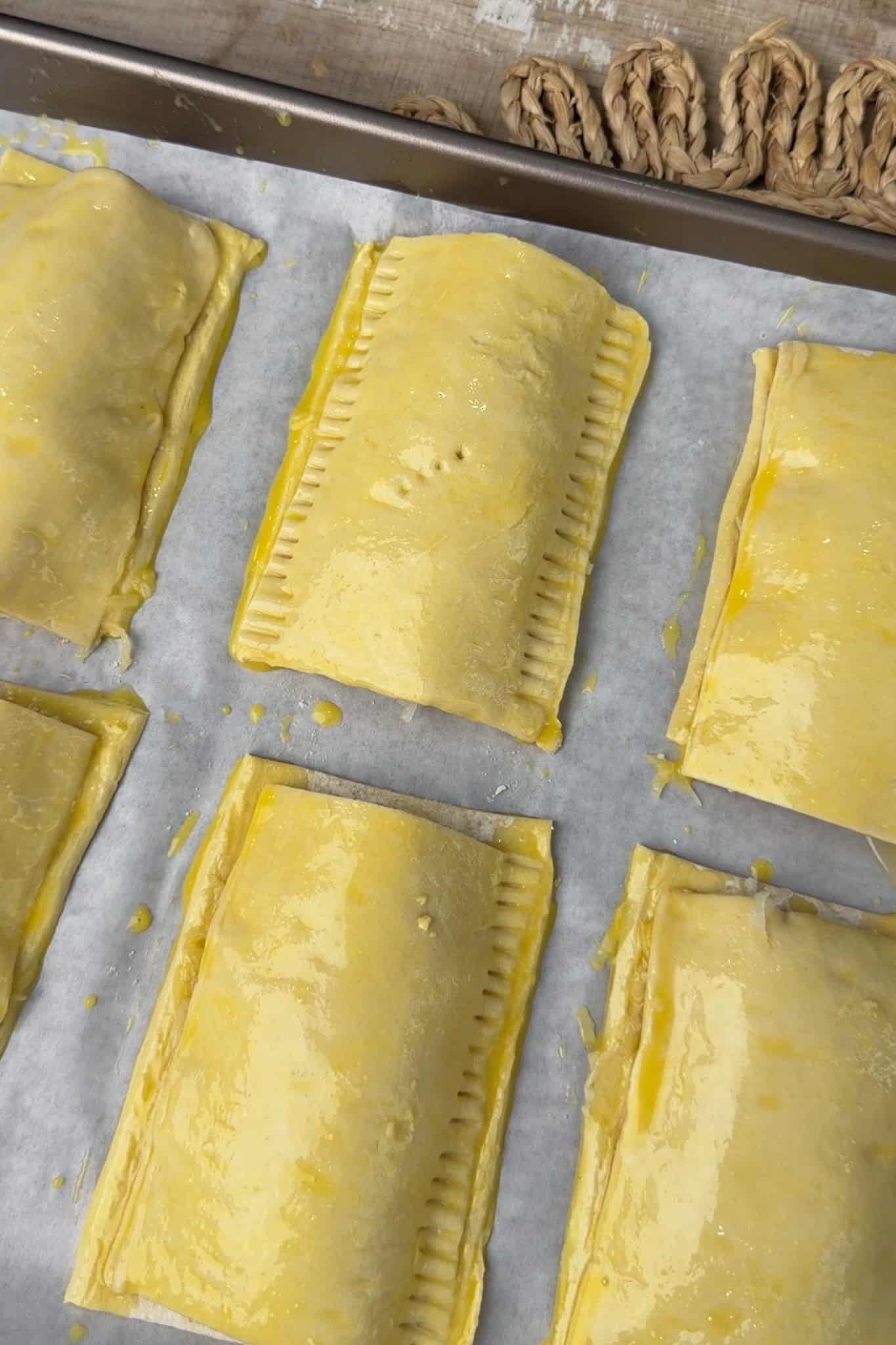
- Sprinkle the top of the egg-washed pastries with a little bit of sanding sugar, if desired.
- Bake at 420F for about 21 minutes or until golden brown and puffed up.
- While the pastries are baking, make your simple syrup by adding 3 tablespoon of water with 3 tablespoons of white sugar to a cup and microwaving for 1 minute or until the sugar is fully dissolved. Once desolved, add the coconut extract and mix to combine.
- Once out of the oven, brush the top with simple syrup and allow to cool.
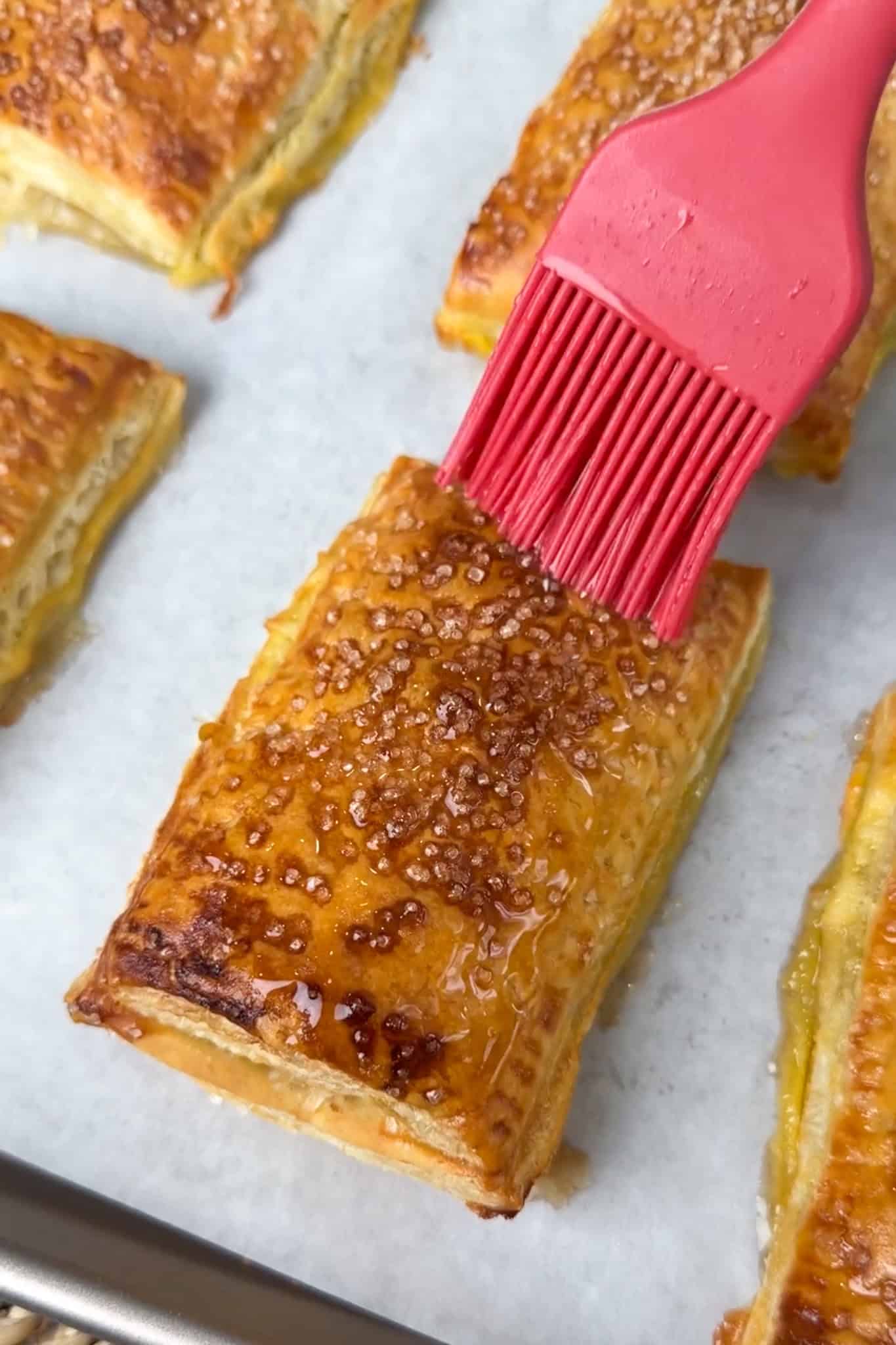
- Allow the pastries to cool off completely before eating.
Top tips for making pastelitos de coco
Cuban coconut pastelitos are a delightful treat - flaky puff pastry enveloping a sweet and sweet coconut filling. But achieving that perfect balance of crispy crust and gooey coconut goodness can seem tricky. Here are some top tips to elevate your pastelito game:
The Power of Puff Pastry:
- Quality Matters: Use high-quality puff pastry for the best results. Look for frozen puff pastry sheets that are all-butter and unfilled. Avoid pre-rolled puff pastry dough, as it might not puff as well.
- Thaw Thoroughly: Thaw the puff pastry sheets completely in the refrigerator before using. This ensures even cooking and prevents the dough from tearing.
- Temperature is Key: For a perfectly crisp and flaky crust, ensure the puff pastry is cold before assembling the pastelitos. You can even pop it back in the refrigerator for a few minutes before working with it.
Assembly and Baking:
- Egg Wash Elegance: Brush the tops of your pastelitos with an egg wash before baking. This creates a beautiful golden brown color and adds a touch of shine.
- Temperature Matters: Bake your pastelitos in a preheated oven at a high temperature. This ensures a crispy crust and prevents the pastry from becoming soggy.
- The Power of Cooling: Let the pastries cool slightly on a wire rack before serving. This allows the filling to set further and prevents them from becoming mushy.
Coconut Turnover Substitutions
Craving those delightful Cuban pastelitos de coco but missing a key ingredient? Here are some clever substitutions to keep your taste bud trip to Cuba on track:
Puff Pastry in a Pinch:
- Phyllo Dough: This versatile dough can be layered to create a flaky crust similar to puff pastry. However, phyllo dough dries out quickly, so handle it with care and brush generously with melted butter between layers to maintain moisture.
- Pie Dough: While not as light and flaky, a good quality refrigerated pie dough can work in a pinch. What you'll end up with will be be like a coconut poptart.
- Flaky Croissant Dough: This alternative offers a buttery and flaky texture. You might need to adjust the baking time slightly as croissant dough can brown faster.
Coconut Filling Flexibilty:
- Storebought coconut filling - Don't want to make your coconut filling, feel free to buy this coconut in syrup instead.
- Apple Pie Filling - Opt instead for apple pie filling for apple turnovers.
- Cream Cheese - You can make make cheese pastelitos with cream cheese
- Guava paste - You can swap the coconut filling for guava paste for guava pastelitos
- Pineapple Preserves - Want a tropical spin, swap the coconut filling with pineapple preserves.
- Spinach and cheese - For a savory spin on these pastries, try these spinach and feta turnovers.
Storage for pastelitos de coco
While eating your Cuban pastelitos fresh is the ideal, if that's not an option here are some storage alternatives.
Freshly Baked Pastelitos:
- Room Temperature (Short Term): Freshly baked pastelitos can be stored at room temperature in an airtight container for up to 2 days. This is a good option for enjoying them within a short period.
Refrigerator (For Longer Storage):
- Airtight Container: Once the pastelitos have cooled completely, store them in an airtight container in the refrigerator for up to 5 days. The cooler temperature will help the pastry crust stay crispier for longer.
- Reheating: When ready to enjoy, preheat your oven to 350°F (175°C). Wrap the pastelitos loosely in foil and warm them for 3-7 minutes, or until heated through.
Check out these other dessert recipes
Pastelitos De Coco
Ingredients
- 1 package puff pastry sheets I used Pepperidge Farm
- ¾ cup of coco en almibar
- 1 Large Egg whisked
- 3 Tablespoons white sugar
- ½ teaspoon coconut extract
- 3 Tablespoons water and more for sealing the puff pastry sheets
- 1 Tablespoon Sanding sugar optional
Instructions
- Heat oven to 420F. Line a baking sheet with parchment paper. Add the egg to a small bowl, beat, then set aside.
- Unfold each puff pastry sheet over the parchment paper and cut into 6 rectangles. You should have 12 rectangles total.
- Place your coco en almibar in a fine mesh strainer and place the strainer in a bowl to drain excess syrup. If the coconut has too much syrup will spill and spread all over the baking pan while in the oven.
- Place 2 tablespoons of strained coconut in the center of each rectangle, leaving about ½ an inch of pastry around the edges.
- Brush water on the exposed pastry edges around the coconut and then place the tops of the puff pastry (the remaining rectangles) on the prepared pastry with coconut. Press the edges of the pastelitos so seams are sealed together.
- Cut a small slice or poke a couple of holes on the top of the pastry to allow steam out while baking.
- Crack an egg into a small bowl and whisk it until well combined and then brush the tops of the puff pastries with the egg.
- Completely optional, you can sprinkle a little bit of sanding sugar over each egg-washed pastry before baking.
- Bake at 420F for about 21 minutes or until golden brown and puffed up.
- While the pastries are baking, make your simple syrup by adding 3 tablespoon of water with 3 tablespoons of white sugar to a cup and microwaving for 1 minute or until the sugar is fully dissolved. Once desolved, add the coconut extract and mix to combine.
- Once out of the oven, brush the top with simple syrup and allow to cool.
- Allow the pastries to cool off completely before eating.
Notes
Top tips for making pastelitos de coco
Cuban coconut pastelitos are a delightful treat - flaky puff pastry enveloping a sweet and sweet coconut filling. But achieving that perfect balance of crispy crust and gooey coconut goodness can seem tricky. Here are some top tips to elevate your pastelito game: The Power of Puff Pastry:- Quality Matters: Use high-quality puff pastry for the best results. Look for frozen puff pastry sheets that are all-butter and unfilled. Avoid pre-rolled puff pastry dough, as it might not puff as well.
- Thaw Thoroughly: Thaw the puff pastry sheets completely in the refrigerator before using. This ensures even cooking and prevents the dough from tearing.
- Temperature is Key: For a perfectly crisp and flaky crust, ensure the puff pastry is cold before assembling the pastelitos. You can even pop it back in the refrigerator for a few minutes before working with it.
- Egg Wash Elegance: Brush the tops of your pastelitos with an egg wash before baking. This creates a beautiful golden brown color and adds a touch of shine.
- Temperature Matters: Bake your pastelitos in a preheated oven at a high temperature. This ensures a crispy crust and prevents the pastry from becoming soggy.
- The Power of Cooling: Let the pastries cool slightly on a wire rack before serving. This allows the filling to set further and prevents them from becoming mushy.
Coconut Turnover Substitutions
Craving those delightful Cuban pastelitos de coco but missing a key ingredient? Here are some clever substitutions to keep your taste bud trip to Cuba on track: Puff Pastry in a Pinch:- Phyllo Dough: This versatile dough can be layered to create a flaky crust similar to puff pastry. However, phyllo dough dries out quickly, so handle it with care and brush generously with melted butter between layers to maintain moisture.
- Pie Dough: While not as light and flaky, a good quality refrigerated pie dough can work in a pinch. What you'll end up with will be be like a coconut poptart.
- Flaky Croissant Dough: This alternative offers a buttery and flaky texture. You might need to adjust the baking time slightly as croissant dough can brown faster.
- Apple Pie Filling - Opt instead for apple pie filling for apple turnovers.
- Cream Cheese - You can make make cheese pastelitos with cream cheese
- Guava paste - You can swap the coconut filling for guava paste for guava pastelitos
- Pineapple Preserves - Want a tropical spin, swap the coconut filling with pineapple preserves.
- Spinach and cheese - For a savory spin on these pastries, try these spinach and feta turnovers.
Storage for pastelitos de coco
While eating your Cuban pastelitos fresh is the ideal, if that's not an option here are some storage alternatives. Freshly Baked Pastelitos:- Room Temperature (Short Term): Freshly baked pastelitos can be stored at room temperature in an airtight container for up to 2 days. This is a good option for enjoying them within a short period.
- Airtight Container: Once the pastelitos have cooled completely, store them in an airtight container in the refrigerator for up to 5 days. The cooler temperature will help the pastry crust stay crispier for longer.
- Reheating: When ready to enjoy, preheat your oven to 350°F (175°C). Wrap the pastelitos loosely in foil and warm them for 3-7 minutes, or until heated through.
Leave a Reply