

Somewhere along the way, as the years added up, I became completely obsessed with coconut cake—and honestly, I wouldn’t have it any other way. What started as a casual preference has turned into a full-blown tradition: for the past ten years, I’ve baked my own birthday cake every single year, each one a little more coconut-forward than the last.
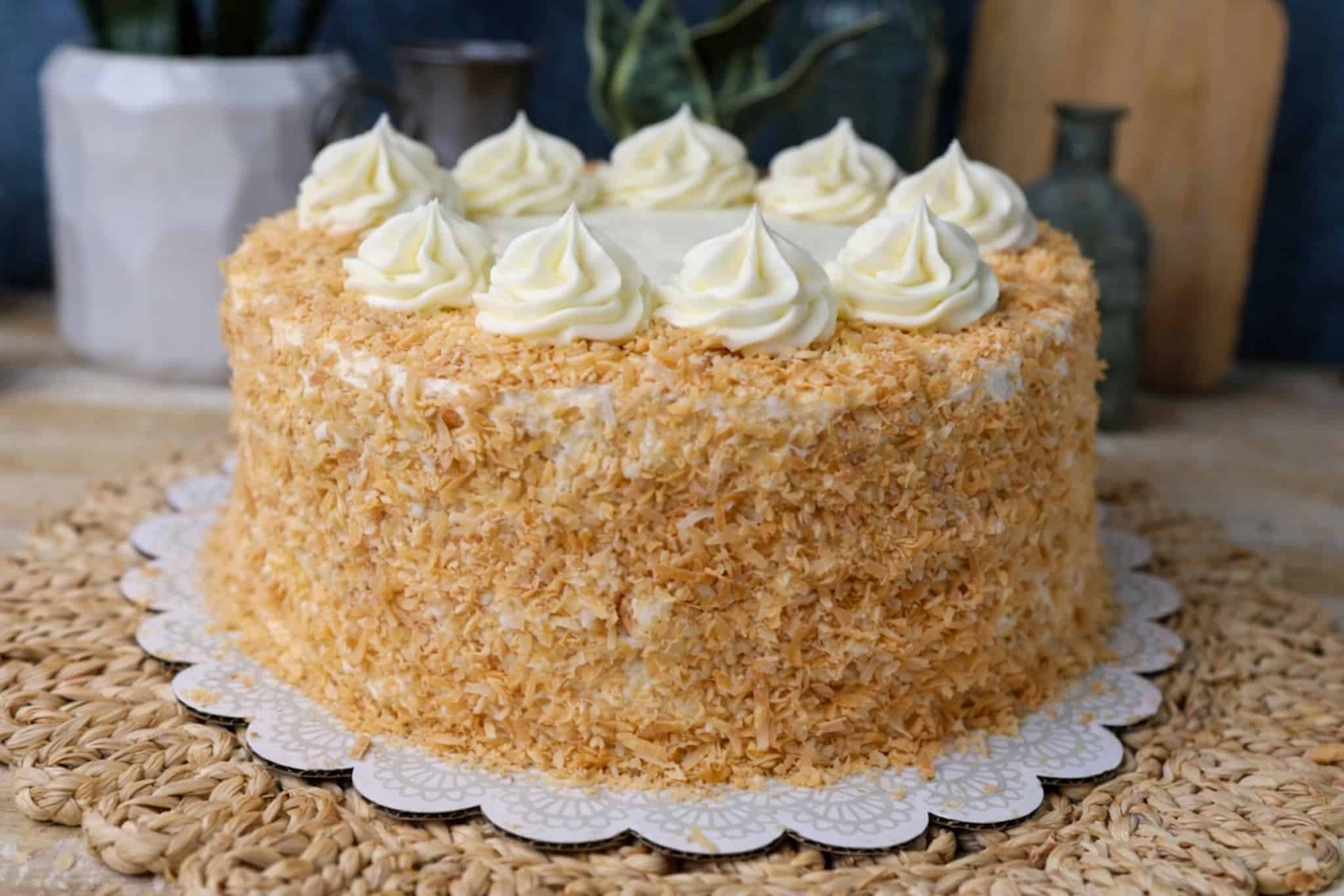
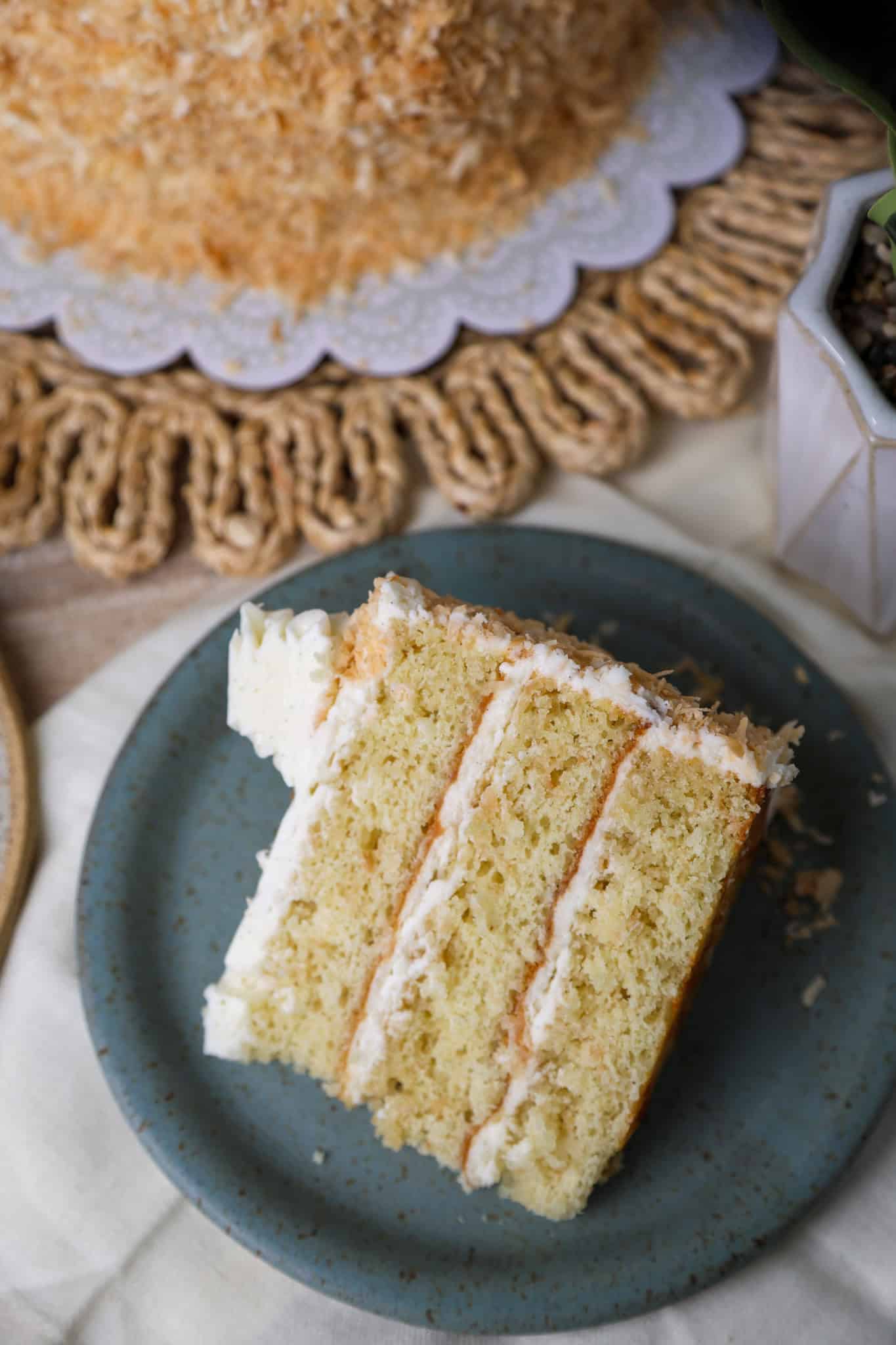
This coconut cake recipe feels like the perfect expression of that journey, with tender, fluffy layers and a luxuriously smooth cream cheese coconut buttercream that’s rich without being heavy. It’s nostalgic, celebratory, and deeply personal—a cake that tastes like growing older, knowing what you love, and leaning into it unapologetically.
Why you'll love this toasted coconut cake
- Creamy coconut cream cheese buttercream that’s perfectly sweet and tangy
- Toasted coconut adds a warm, nutty crunch for amazing texture contrast
- Elegant yet comforting dessert that feels bakery-quality and homemade
- Perfect balance of tropical flavor without being overly sweet
- Ideal for celebrations, holidays, and special occasions
- Crowd-pleasing cake that coconut lovers absolutely adore
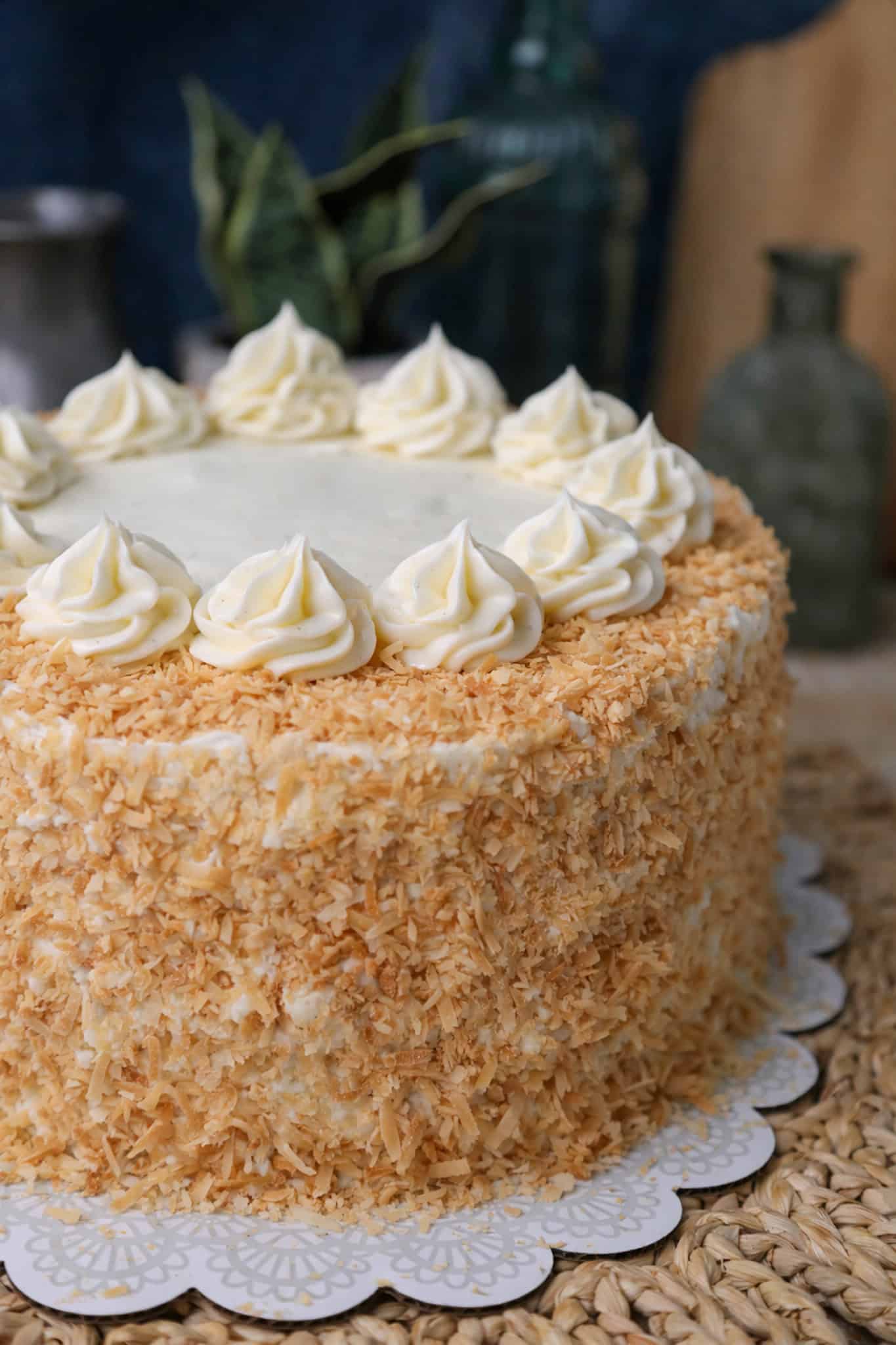
- Beautiful presentation with golden toasted coconut on top
- Classic flavor combination with an elevated, indulgent twist
Key Ingredients needed for coconut cake
- Flour is the structural backbone of a coconut cake and provides the framework that allows the cake to rise and hold its shape. Using cake flour or properly balanced all-purpose flour ensures a tender crumb that does not overpower the delicate coconut flavor.
- Coconut Milk is essential for delivering moisture and authentic coconut flavor throughout the cake. Full-fat coconut milk adds richness and prevents the cake from drying out, especially during baking.
- Coconut Extract is essential for delivering a concentrated and consistent coconut flavor that cannot always be achieved through coconut milk alone. Even a small amount enhances aroma and ensures the coconut taste remains pronounced after baking.
- Eggs are critical for binding the ingredients together and giving the cake structure and stability. They also contribute to moisture and help create a soft, cohesive crumb.
- Shredded Coconut defines the texture and identity of a coconut cake by adding chew and visual appeal. Toasted or untoasted coconut reinforces the flavor and gives the cake a distinctive, bakery-style finish.
How to make this cake
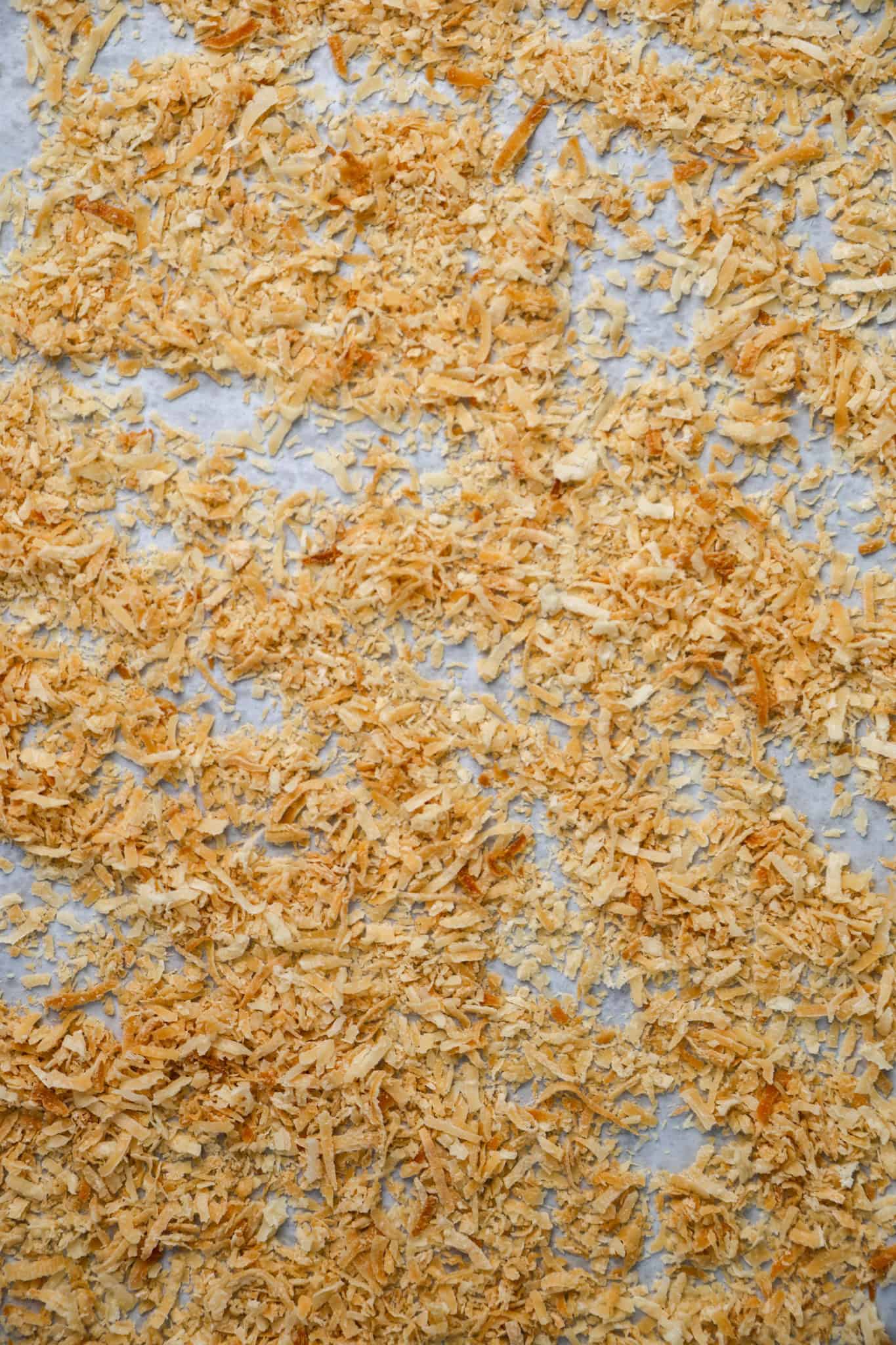
How to toast shredded coconut
- Preheat the oven to 300°F, which allows the coconut to toast slowly without scorching.
- Spread the sweetened shredded coconut in a thin, even layer on a parchment-lined baking sheet to promote uniform browning.
- Bake for 10 minutes, stirring every 2 to 3 minutes, because sweetened coconut browns quickly due to its sugar content.
- Remove the coconut once it turns to your desired golden color, as it will continue to darken slightly from residual heat.
- Let it cool completely before using so it becomes crisp and evenly toasted.
Bake the cakes
- Preheat oven to 350°F. Grease three 8-inch cake pans, line with parchment paper rounds
- Make the cake: Whisk the cake flour, baking powder, baking soda, and salt together. Set aside.
- Using a stand mixer fitted with a whisk attachment, beat the butter and sugar together on medium speed until smooth and creamy, about 2 minutes. Scrape down the sides and up the bottom of the bowl with a rubber spatula as needed.
- Beat in the eggs until combined, then add the sour cream, vanilla extract, and coconut extract. Beat until combined and be sure to scrape the sides of the bowl. With the mixer on low speed, slowly add the dry ingredients and coconut milk.
- Beat on low speed until combined, then add 1 cup of toasted shredded coconut. Fold it in by hand to make sure there are no butter lumps at the bottom of the bowl.
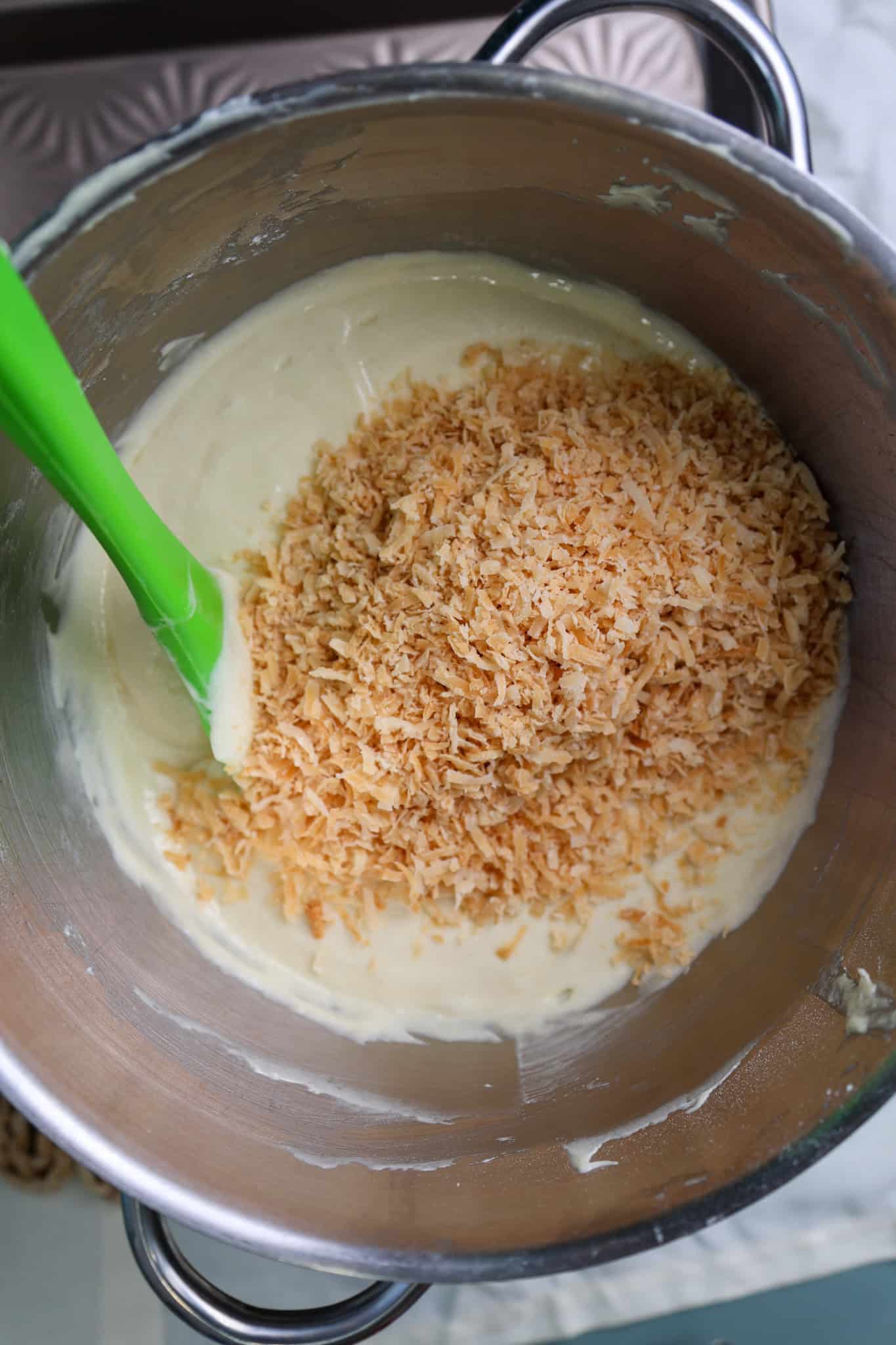
- Pour batter evenly into cake pans. Bake for 23 minutes or until the cakes are baked through. To test for doneness, insert a toothpick into the center of the cake. If it comes out clean, it’s done.
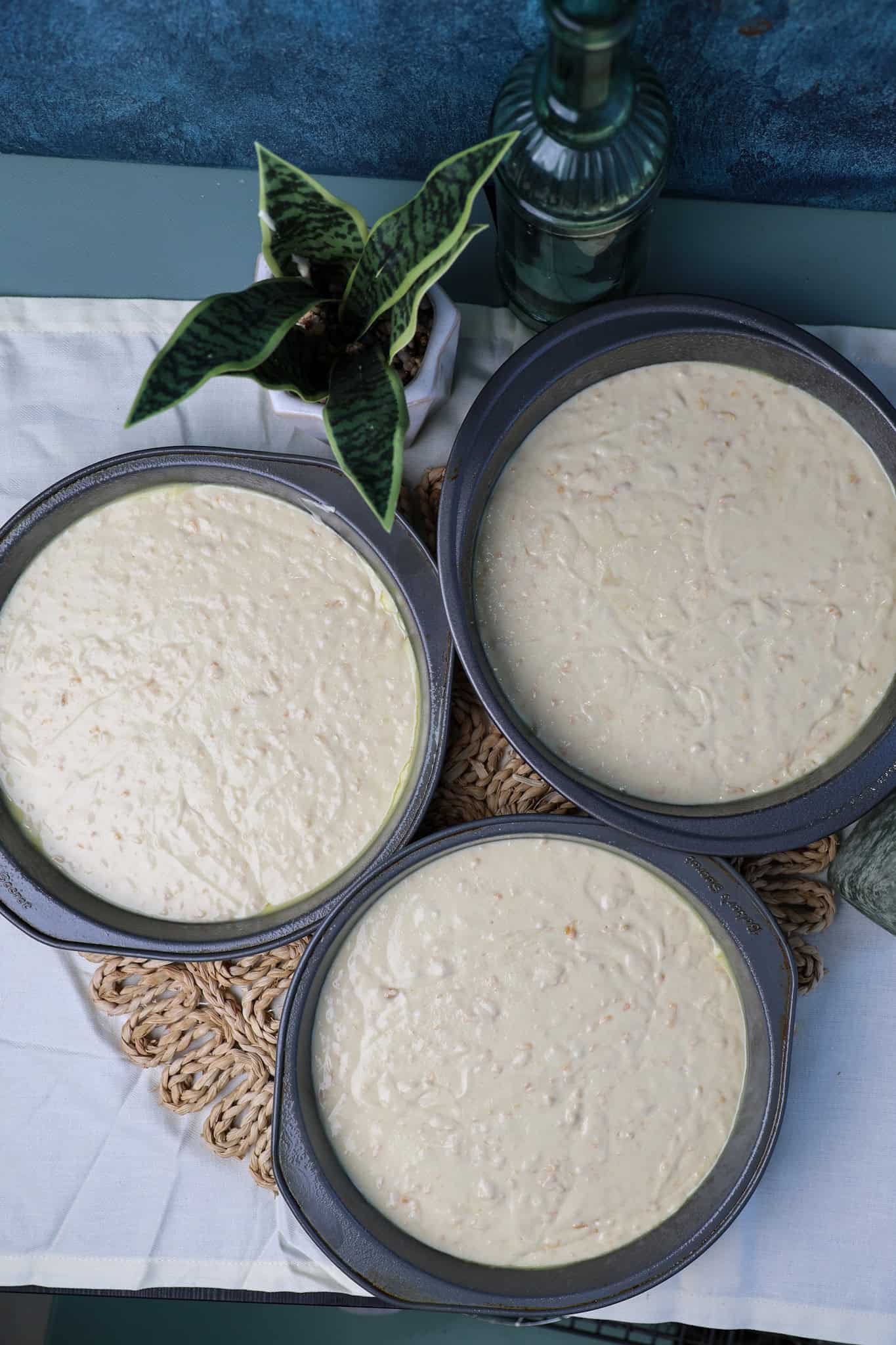
- Allow cakes to cool in the pans for atleast 1 hour, then remove from the pans and place the cakes directly on the rack to continue cooling. The cakes must be completely cool before frosting.
How to make this cream cheese buttercream
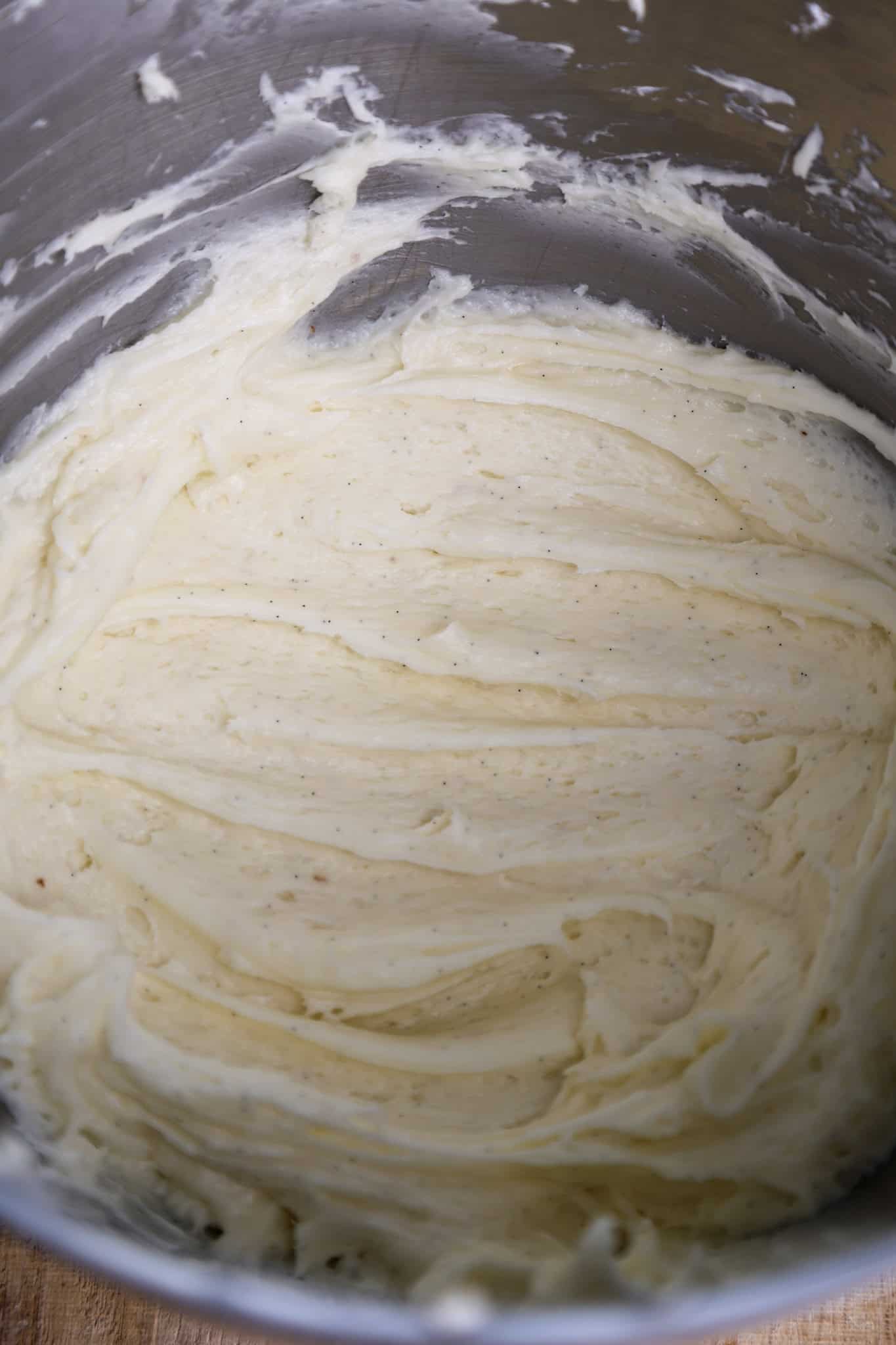
- In a stand mixer fitted with a whisk, beat the butter and cream cheese together on medium speed until smooth, about 2 minutes.
- Add confectioners’ sugar, coconut milk, coconut extract, and salt with the mixer running on low.
- Use a sharp knife to slice open the vanilla pods lengthways and use the back of a spoon to scoop out all of the vanilla bean seeds. Add the seeds to the frosting and beat again until the perfect consistency.
- Increase to high speed and beat for 3 minutes. Add more confectioners’ sugar if frosting is too thin, more coconut milk if frosting is too thick, or an extra pinch of salt if frosting is too sweet.
Make the coconut simple syrup
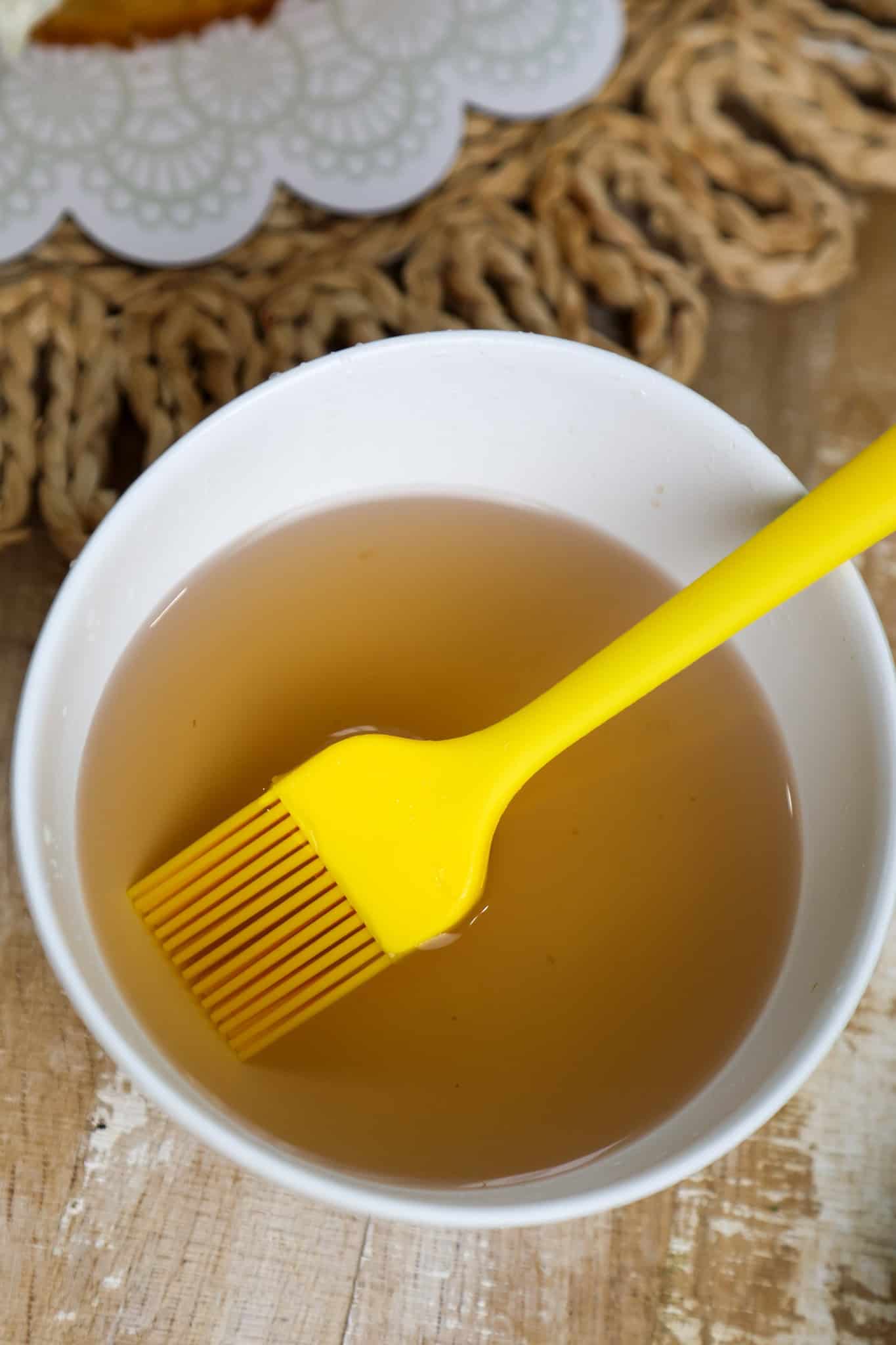
- Place the sugar and water in a microwave safe bowl, microwave for 1 minute or until sugar is fully melted. Stir to combine and then mix in the coconut extract and vanilla extract.
How to assemble this cake
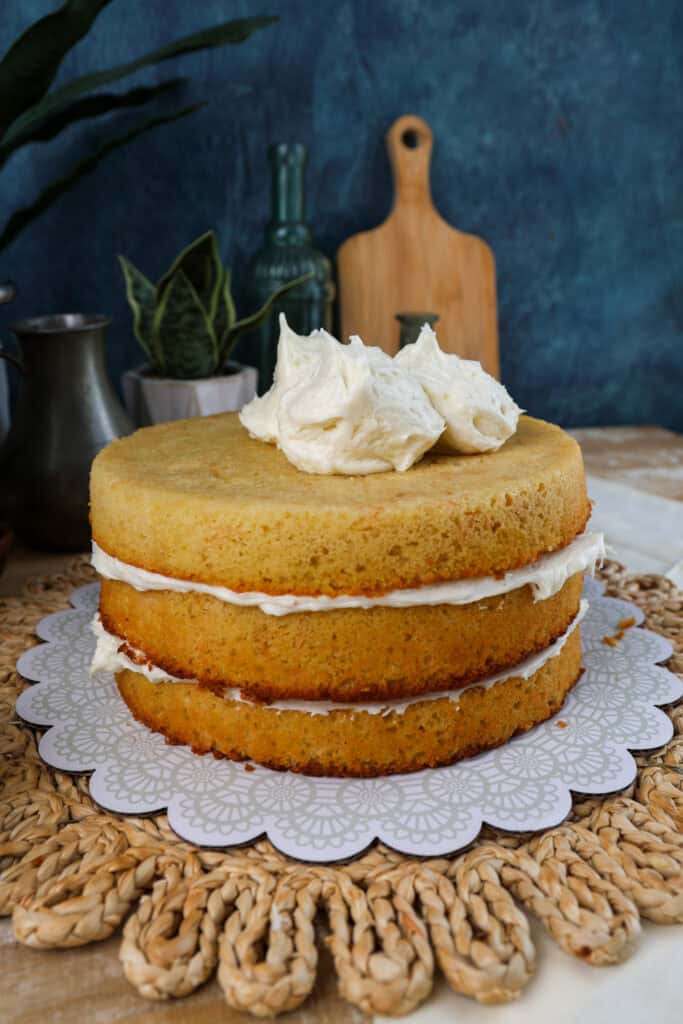
- Once cakes completely. Place the bottom layer on the cake board. Brush one third of the coconut syrup over the cake layer and using an icing spatula, spread 1 and ½ cups of frosting in an even layer on top. Bring the frosting just over the edge of the cake; this will be helpful when it’s time to frost the sides.
- Place the second layer top-side-down on top. Make sure it aligns with the bottom cake layer. Brush one third of the coconut syrup over the cake layer.
- Spread 1 and ½ cups frosting evenly on top, just as you did with the bottom layer.
- Place third layer top-side-up on top. Again, make sure it’s perfectly aligned and brush remaining coconut syrup over the cake layer.
- Dollop half of the remaining frosting on top of the cake and use an icing spatula to smooth it to the edges. Apply the remaining frosting all around the sides of the cake. Apply the rest of the frosting on the sides of the cake, then bench scraper to smooth it all out.
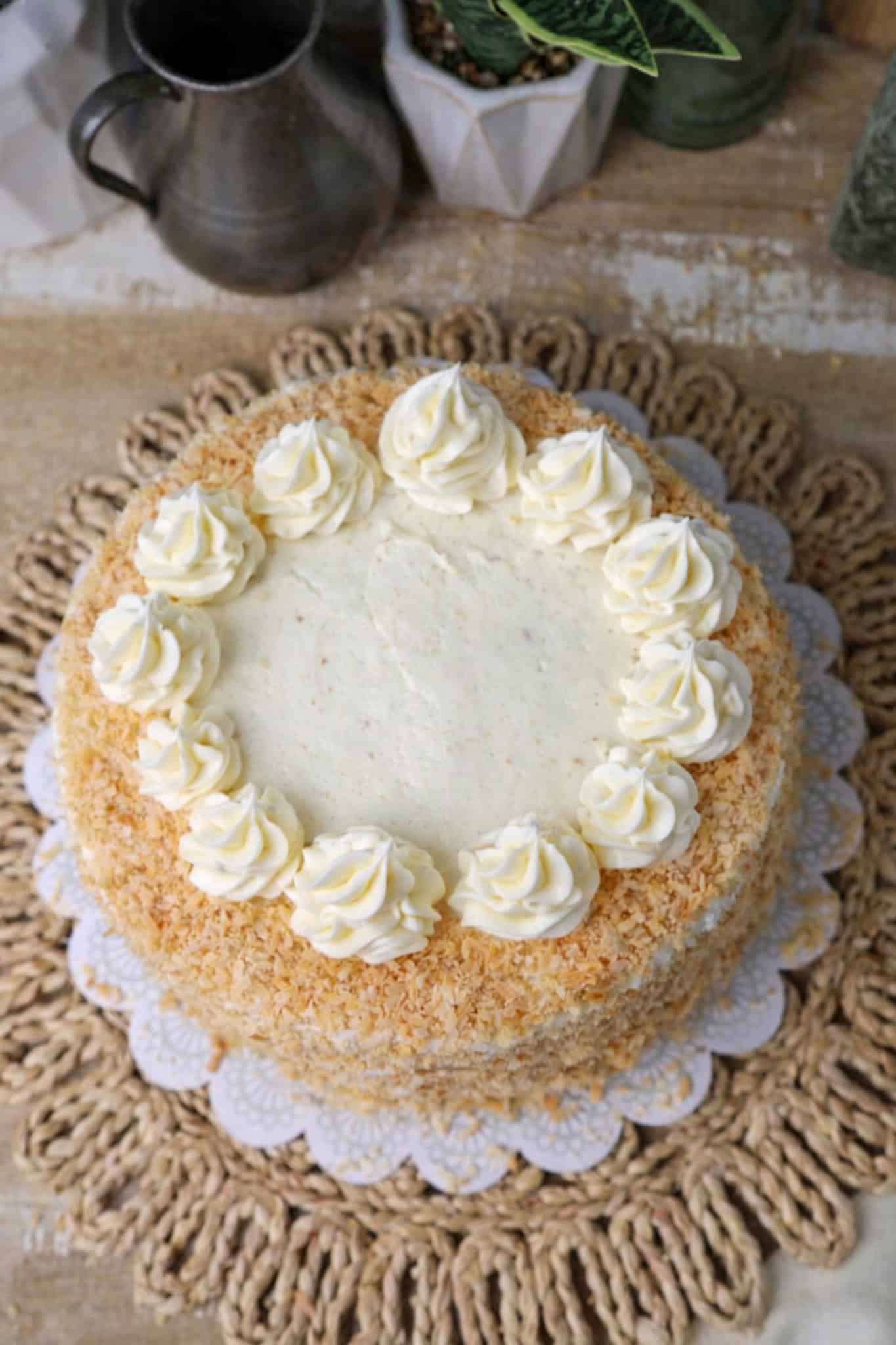
- Sprinkle the toasted coconut flakes onto the cake and apply it to the sides. Lightly press the toasted coconut into the sides so it sticks.
- Wipe any excess frosting off of the cake board.
Try these other cake recipes
- Triple chocolate cake
- Carrot Cake
- Strawberry Vanilla Cake
- Lemon Lime Cake
- Coconut Dulce De Leche cake
- Golden Oreo Cake
Tips for making the perfect coconut cake
Here are the tips and tricks I use to make the perfect coconut cake:
- When scooping the batter into the cake pans, I use an ice cream scoop to make sure I get equal amounts of batter into each pan.
- In order to cool the cakes down, I like wrap the cake layers in ceram wrap and put the cake layers in the fridge to cool, I place them upside down (parchment paper side up) to help flatten the tops and avoid the need to cut off the tops to level them off.
- When scooping the frosting between cake layers, I use the same ice cream scoop to make sure each layer has an even amount of frosting.
Substitutions and variations for coconut cake with coconut frosting
Flour
- Gluten-free 1:1 flour A gluten-free one-to-one baking flour can be used, and adding one extra egg or one tablespoon of oil helps maintain moisture.
- Almond flour (partial swap) Almond flour can replace up to one quarter of the flour to add moisture and a subtle nutty flavor.
Fat
- Butter → Coconut oil Butter can be replaced with coconut oil to enhance the coconut flavor of the cake.
- Butter → Vegetable oil Butter can be replaced with vegetable oil to produce a softer and more moist crumb.
- Half butter + half oil Using half butter and half oil provides a balance of rich flavor and tenderness.
Vanilla Bean Substitutions
- Vanilla bean paste: Use 1 tablespoon vanilla bean paste per 1 vanilla bean. It gives a similar flavor and visible specks.
- Vanilla powder: Use 1 teaspoon vanilla powder per 1 vanilla bean, adjusting to taste.
Frosting Flavor Variations
- Citrus Cream Cheese Frosting - Citrus zest such as lemon, lime, or orange adds brightness and balances the sweetness.
- Rum Cream Cheese Frosting - A small amount of rum can be added for a subtle tropical flavor.
Texture & Presentation Variations
- Sheet cake The recipe can be baked as a sheet cake for easier serving. Simply pour the batter into a greased and lightly floured 9×13-inch pan and bake for 40 minutes or until a toothpick inserted in the center comes out clean.
- Cupcakes The batter can be used to make cupcakes. Fill cupcake liners ⅔ full. Bake at 350°F for 20 minutes. Yields about 2 dozen.
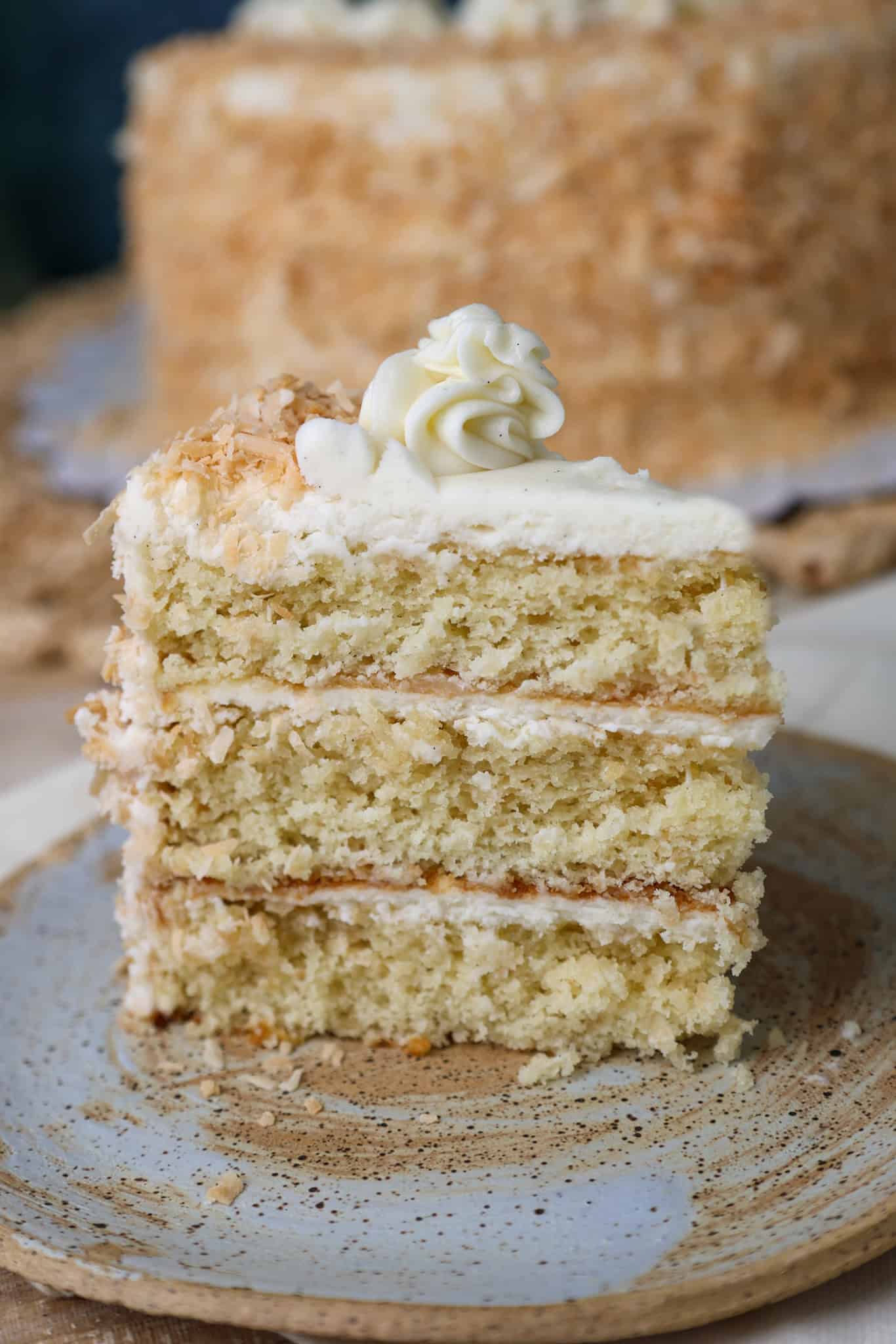
Storage instructions for this simple coconut cake recipe
- Refrigeration: Because of the cream cheese coconut buttercream, store the cake covered in the refrigerator.
- Short-Term Storage: Keep the cake in an airtight container or tightly wrapped for up to 4–5 days.
- Before Serving: Let the cake sit at room temperature for 30–45 minutes before serving to soften the cake and buttercream.
- Freezing (Optional):
- Freeze unfrosted cake layers wrapped tightly in plastic wrap and foil for up to 2 months.
- Frosted cake slices can be frozen in an airtight container for up to 1 month.
- Avoid Heat: Do not leave the cake at room temperature for more than 2 hours, as cream cheese frosting can spoil.
Trey these other dessert recipes

Basic Coconut Cake
Ingredients
Cake
- 2 ½ cup cake flour
- 2 teaspoons baking powder
- ½ teaspoon baking soda
- 1 teaspoon salt
- ¾ cup unsalted butter softened to room temperature
- 1 ½ cup granulated sugar
- 3 large egg at room temperature
- ½ cup sour cream at room temperature
- 2 teaspoons pure vanilla extract
- 1 ½ teaspoon coconut extract
- 1 cup unsweetened canned coconut milk at room temperature
- 1 cup sweetened shredded coconut toasted
Coconut Simple Syrup
- ¼ teaspoon pure vanilla extract
- ½ teaspoon coconut extract
- 3 tablespoon water
- 3 tablespoon granulated sugar
Coconut Cream Cheese Buttercream
- 1 cup unsalted butter room temperature
- 8 ounces full-fat cream cheese room temperature
- 5 cups confectioners’ sugar
- 2 Tablespoons canned coconut milk
- 2 vanilla bean pods scraped
- 1 teaspoon coconut extract
- ⅛ teaspoon salt
- 2 cups sweetened shredded coconut toasted
Instructions
Toast the shredded coconut
- Preheat the oven to 300°F, which allows the coconut to toast slowly without scorching.
- Spread the sweetened shredded coconut in a thin, even layer on a parchment-lined baking sheet to promote uniform browning.
- Bake for 10 minutes, stirring every 2 to 3 minutes, because sweetened coconut browns quickly due to its sugar content.
- Remove the coconut once it turns to your desired golden color, as it will continue to darken slightly from residual heat.
- Set aside and let it cool completely before using so it becomes crisp and evenly toasted.
Bake the cakes
- Preheat oven to 350°F. Grease three 8-inch cake pans, line with parchment paper rounds
- Make the cake: Whisk the cake flour, baking powder, baking soda, and salt together. Set aside.
- Using a stand mixer fitted with a whisk attachment, beat the butter and sugar together on medium speed until smooth and creamy, about 2 minutes. Scrape down the sides and up the bottom of the bowl with a rubber spatula as needed.
- Beat in the eggs until combined, then add the sour cream, vanilla extract, and coconut extract. Beat until combined and be sure to scrape the sides of the bowl. With the mixer on low speed, slowly add the dry ingredients and coconut milk.
- Beat on low speed until combined, then add 1 cup of toasted shredded coconut. Fold it in by hand to make sure there are no butter lumps at the bottom of the bowl.
- Pour batter evenly into cake pans. Bake for 23 minutes or until the cakes are baked through. To test for doneness, insert a toothpick into the center of the cake. If it comes out clean, it’s done.
- Allow cakes to cool in the pans for atleast 1 hour, then remove from the pans and place the cakes directly on the rack to continue cooling. The cakes must be completely cool before frosting.
Make the coconut frosting
- In a stand mixer fitted with a whisk, beat the butter and cream cheese together on medium speed until smooth, about 2 minutes.
- Add confectioners’ sugar, coconut milk, coconut extract, and salt with the mixer running on low.
- Use a sharp knife to slice open the vanilla pods lengthways and use the back of a spoon to scoop out all of the vanilla bean seeds. Add the seeds to the frosting and beat again until the perfect consistency.
- Increase to high speed and beat for 3 minutes. Add more confectioners’ sugar if frosting is too thin, more coconut milk if frosting is too thick, or an extra pinch of salt if frosting is too sweet.
Make the coconut simple syrup
- Place the sugar and water in a microwave safe bowl, microwave for 1 minute or until sugar is fully melted. Stir to combine and then mix in the coconut extract and vanilla extract.
Assemble and decorate
- Place 1 cake layer on your cake board upside down with the domed side facing down. Brush one third of the coconut syrup over the cake layer and then evenly cover the cake layer with 1 ½ heaping cup of frosting.
- Top with second cake layer and brush the top of the cake layer ⅓ of the coconut simple syrup. Then, evenly cover the top with another heaping cup and a half of frosting. Top with the third cake layer and brush with the remaining coconut simple syrup. Spread the remaining frosting all over the top and sides.
- Use an icing spatula to apply the frosting and a bench scraper to smooth the sides.
- Sprinkle the remaining toasted coconut on top of the cake and apply it to the sides. This can get messy and I suggest slightly pressing the shredded coconut into the sides so it better sticks to the frosting.
- Refrigerate cake for at least 30 minutes before slicing. This helps the cake hold its shape when cutting.
Notes
Substitutions and variations for coconut cake with coconut frosting
Flour
- Gluten-free 1:1 flour A gluten-free one-to-one baking flour can be used, and adding one extra egg or one tablespoon of oil helps maintain moisture.
- Almond flour (partial swap) Almond flour can replace up to one quarter of the flour to add moisture and a subtle nutty flavor.
Fat
- Butter → Coconut oil Butter can be replaced with coconut oil to enhance the coconut flavor of the cake.
- Butter → Vegetable oil Butter can be replaced with vegetable oil to produce a softer and more moist crumb.
- Half butter + half oil Using half butter and half oil provides a balance of rich flavor and tenderness.
Vanilla Bean Substitutions
- Vanilla bean paste: Use 1 tablespoon vanilla bean paste per 1 vanilla bean. It gives a similar flavor and visible specks.
- Vanilla powder: Use ½–1 teaspoon vanilla powder per 1 vanilla bean, adjusting to taste.
Frosting Flavor Variations
- Citrus Cream Cheese Frosting - Citrus zest such as lemon, lime, or orange adds brightness and balances the sweetness.
- Rum Cream Cheese Frosting - A small amount of rum can be added for a subtle tropical flavor.
Texture & Presentation Variations
- Sheet cake The recipe can be baked as a sheet cake for easier serving. Simply pour the batter into a greased and lightly floured 9×13-inch pan and bake for 40 minutes or until a toothpick inserted in the center comes out clean.
- Cupcakes The batter can be used to make cupcakes. Fill cupcake liners ⅔ full. Bake at 350°F for 20 minutes. Yields about 2 dozen.
Storage instructions for this simple coconut cake recipe
- Refrigeration: Because of the cream cheese coconut buttercream, store the cake covered in the refrigerator.
- Short-Term Storage: Keep the cake in an airtight container or tightly wrapped for up to 4–5 days.
- Before Serving: Let the cake sit at room temperature for 30–45 minutes before serving to soften the cake and buttercream.
- Freezing (Optional):
- Freeze unfrosted cake layers wrapped tightly in plastic wrap and foil for up to 2 months.
- Frosted cake slices can be frozen in an airtight container for up to 1 month.
- Avoid Heat: Do not leave the cake at room temperature for more than 2 hours, as cream cheese frosting can spoil.
Cari says
The best coconut cake, everyone loved it,